
The New Canadian Homebuyer: How Affordability, Debt Levels, and Shifting Lender Rules Are Changing the Mortgage Landscape

Over the last few years, the experience of buying a home in Canada has changed more than many people expected. Prices climbed, rates shifted, and household budgets tightened. Even buyers with strong incomes have started rethinking what they can realistically afford. According to Statistics Canada, the average Canadian household now carries more than 1.80 dollars of debt for every 1 dollar of disposable income. That is one of the highest ratios among G7 countries.
With this financial pressure building, many homebuyers are asking new questions. How much can they borrow. How do lenders assess risk now. What does a realistic budget actually look like in today’s market. As mortgage professionals, we see these concerns every day, and the answer often starts with understanding how the lending environment has changed.
What Lenders Are Looking At Today
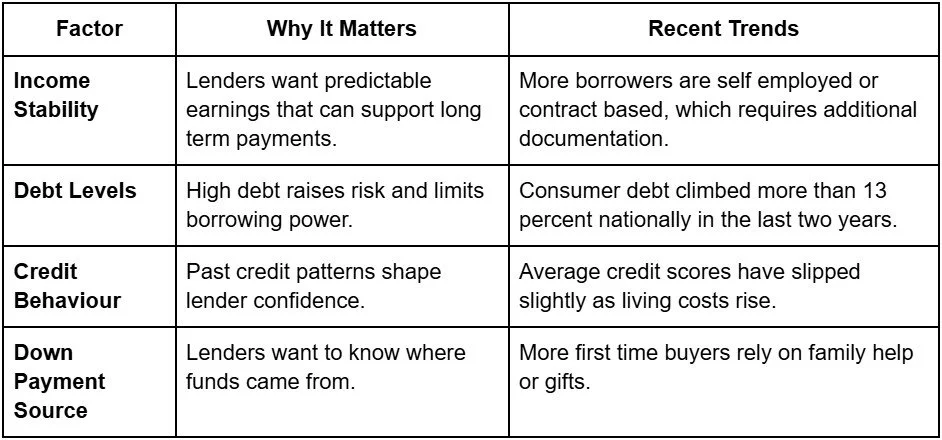
Even when buyers feel financially comfortable, rising household debt and tighter rules mean applications often take more work.

Affordability: The Reality Many Canadians Are Facing
The cost of housing has gone through major swings. In many cities, average home prices dropped slightly in 2023 but remain almost 40 percent higher than five years ago. Meanwhile, the average rent has increased more than 60 percent in the same period. Not surprisingly, many buyers feel caught between wanting stability and trying to manage the cost of living.
A recent national survey found that 65 percent of Canadians believe homeownership feels less achievable than it did for previous generations. Yet demand remains strong. What is changing is how people approach the process.
More buyers are:
• expanding their search to smaller communities
• choosing homes that require updates instead of fully finished properties
• using co ownership agreements or family support
• planning for longer mortgage horizons instead of rushing into short terms
The traditional path to homeownership looks different now, and that is okay. Flexibility is becoming a normal part of planning.
The Pre Approval Has Become More Important Than Ever
A proper pre approval used to be something people got right before they started shopping. Today, it is often the first step because it sets the tone for the entire search. With rates, stress tests, and lender expectations shifting, a pre approval gives buyers a realistic view of what they can manage.
It also protects them from surprises, like finding out they qualify for less than expected or facing delays when they are ready to make an offer. In the current environment, being prepared often matters just as much as the property itself.
Why More Canadians Are Refinancing or Restructuring Their Mortgages
Higher rates and higher living costs mean many homeowners are looking for ways to smooth out their monthly budget. According to recent data, more than 30 percent of Canadian mortgage holders renewed or refinanced at higher payments between 2022 and 2024. That shift has pushed many people to reassess how their mortgage fits into their overall financial life.
Homeowners are exploring:
• refinancing to consolidate consumer debt
• extending amortizations for breathing room
• switching lenders for better terms
• using home equity for renovations or family support
None of these solutions are quick fixes. They simply reflect the reality that financial stability looks different for everyone, especially now.

Common Scenarios We See With Today’s Buyers and Homeowners
First time buyers feeling stretched
They qualify, but they need more clarity on long term affordability.
Families upgrading or downsizing
Budget and lifestyle matter more than square footage.
Homeowners facing higher renewal payments
A careful review of options can prevent unnecessary stress.
Buyers exploring new communities or smaller cities
Affordability is influencing location more than ever.
Key Takeaways
• Household debt is higher than ever, which affects borrowing power.
• Lenders are focusing more on income stability and overall financial behaviour.
• Affordability challenges are shifting how Canadians buy homes.
• Pre approvals have become essential for planning and protection.
• Refinancing and restructuring are becoming more common tools for financial stability.
• Every buyer’s path looks different, and flexibility matters.
Talk With Your Mortgage Professional
Whether you are buying your first home, renewing your mortgage, or trying to manage rising costs, a clear strategy can make the process feel more manageable. A conversation with a mortgage professional can help you understand your options and find a setup that fits your life.
📞 Call +1 204-997-5021
📧 Email mcabral@204mortgages.com
Let’s build a strategy that works with today’s numbers - and tomorrow’s opportunities.
